Introduction
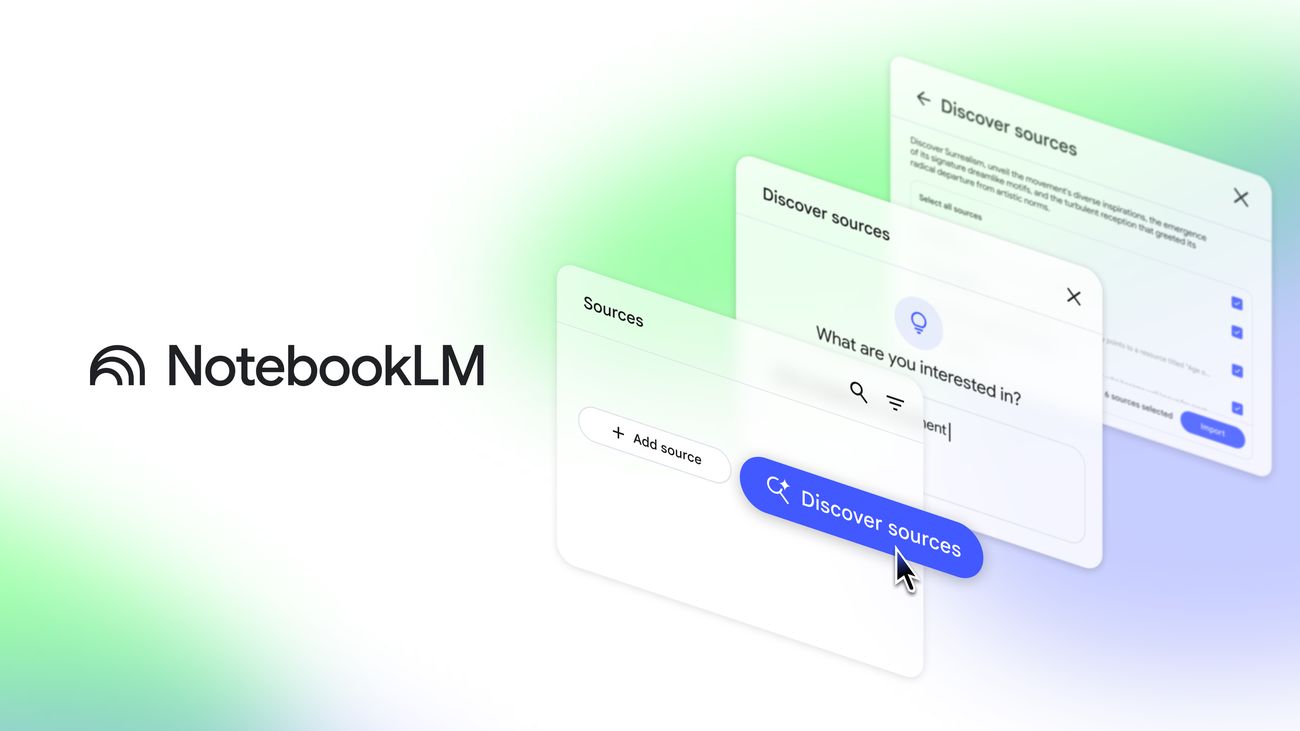
Google has begun rolling out the native integration of NotebookLM within Gemini Web, a strategic move transforming the generalist chatbot into a "grounded" research assistant. As of December 2025, users can attach their notebooks as live data sources directly from the Gemini attachment menu. This feature, gradually available to both Free and Advanced accounts, addresses one of generative AI's biggest challenges: source reliability across complex personal datasets.
Analysis and Technical Details
The integration is not merely a hyperlink but a fusion of Gemini's inference engine with NotebookLM's RAG (Retrieval-Augmented Generation) structure.
- High-Volume Source Management: Unlike Gemini's standard file upload (often limited in persistence or session tokens), this integration allows querying entire notebooks containing up to 50 distinct sources (PDFs, Google Docs, audio, URLs). For Enterprise users, limits can extend significantly higher in specific contexts.
- In-Line Citations: When Gemini responds using a notebook, it provides clickable citations linking back to the exact paragraph in the original document hosted on NotebookLM. This instant verification mechanism drastically reduces hallucinations regarding technical or legal data.
- Dynamic Custom Gems: The most significant update is the ability to build Gems (custom versions of Gemini) that point to a specific notebook. Instead of manually re-uploading files into a static Gem, users can update the notebook in NotebookLM, and the Gem will automatically reflect the new knowledge without reconfiguration.
Market Impact and Competitors
This move positions Google in direct contrast to the OpenAI ecosystem.
- Vs. ChatGPT Team/Enterprise: While OpenAI offers "GPTs" with uploaded knowledge bases, Google's source management now appears more granular. NotebookLM is built specifically for source curation, offering a dedicated interface for reading and listening (Audio Overviews) that is missing from ChatGPT's opaque file management.
- "Unified AI" Strategy: Google is dismantling silos between its experimental products (Labs) and mass-market tools. Bringing NotebookLM logic inside Gemini democratizes AI-assisted research, making it accessible not just to academic researchers but also to professionals using the free version.
Conclusion
Integrating NotebookLM into Gemini marks the shift from an AI that "chats" to an AI that "works" on user data. By enabling access to structured, persistent knowledge bases, Google offers a powerful hybrid tool: Gemini's creative modeling combined with NotebookLM's factual rigor. For users, the added value lies in continuity: data curated in one environment becomes immediately actionable in the other.
FAQ
When will the integration be available to everyone?
The rollout began in December 2025 and is progressive. The feature is gradually appearing in the "Attachments" (+) menu of Gemini Web for both free and paid users.
What is the difference between uploading a PDF to Gemini vs using NotebookLM?
Direct upload to Gemini is ideal for quick, volatile analysis. NotebookLM allows for a persistent knowledge base, supporting up to 50 sources and rigorous citations, reusable across multiple conversations.
Can I use notebooks with Custom Gems?
Yes, this is a key feature. You can configure a Gem to use a specific notebook as its dynamic knowledge base, automatically updating as you modify the notebook content.
Are my data used to train public models?
Google states that for Enterprise and Education users, data in NotebookLM is not used for training. For consumer users, standard Gemini and NotebookLM privacy policies apply, recommending caution with sensitive data not covered by business contracts.